
Why farmed land is important for Curlews
Curlews are a wading bird, spending most of their year at the coast. However, they come inland to breed during the spring and summer, and a large proportion of them choose farmed land for nesting and raising their chicks, mainly in the uplands but also in lowland areas.
Therefore, farmers can play a crucial role in helping them to breed successfully, as custodians of these iconic birds.
The UK hosts around a quarter of the world’s breeding Curlews, so this is a hugely important place for them. But they are in steep decline here. Since the mid 1990s, we’ve lost nearly half (48%) of our breeding Curlews. They will be lost altogether unless there is urgent action.
The main reason for their decline is that not enough chicks are surviving through to fledging. This is due to changes over the years on their breeding grounds, such as suitable habitat being lost or becoming more fragmented, along with pressures from predation and development.
Watch Curlew Custodians for practical advice
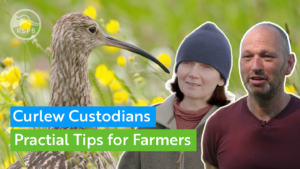 Get tips on how to help Curlews to breed more successfully on your farm in our film for farmers:
How farmers took part in Curlew LIFE
Find out more about the central role that farmers played in Curlew LIFE in this recording of our online film screening event, held on 3 December 2024.
You'll hear from one of our project officers on how he worked with farmers at Hadrian's Wall in northern England, and there's an interview with one of the farmers, giving his perspective.
Plus, an update on the agri-environment schemes in each of the four countries.
What Curlews need
Curlews need a mix of well managed habitats at their breeding grounds, for foraging, nesting and raising chicks. When it comes to helping Curlews to breed successfully on your land, the most important things you can do are:
Managing vegetation with Curlews in mind
- It’s important to have higher vegetation for situating nests, but this still has to be open enough for birds to move around in – where it’s easy for you to kick your boot through the vegetation.
- It also needs to be reasonably close to open feeding habitats (like flushes or meadows) for chicks to forage in. It’s important to have some cover in feeding areas so chicks can hide from predators.
Providing wet ground
- Wet areas/damp ground are particularly important for foraging. Curlews eat all sorts of invertebrates picked from the surface or found by probing soft ground. Adults feed on earthworms, leatherjackets, beetles, spiders, caterpillars. Chicks generally feed on surface insects initially, and will start probing for earthworms as they get bigger.
Minimising disturbance
- Disturbing the Curlews as little as possible is important when they're nesting and have young chicks.
Predation management
- Making your farm less attractive to predators.
How you go about these will vary depending on the kind of landscape you’re farming in. The advice below is quite general, so we do always recommend seeking advice that is specific to your farm.
1. Managing vegetation
Curlews tend to choose boggy, rushy areas to breed in, so managing rush is key in these types of landscapes.
That’ll generally mean a combination of topping and grazing, which can be challenging in very wet areas.
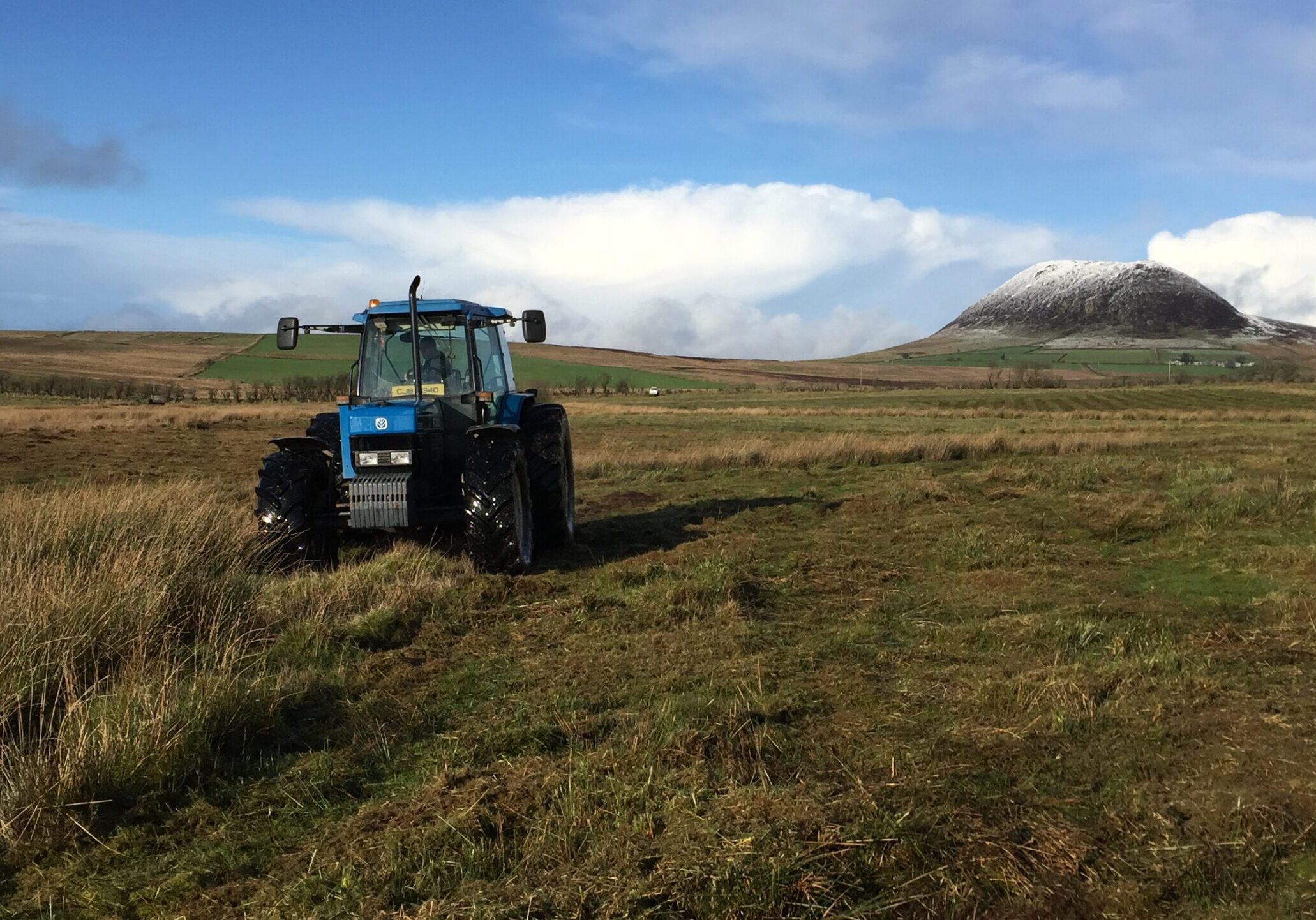
Topping rushes
Curlews need a tussocky but open structure to the vegetation, where there's enough height and complexity to conceal a nest, but also with enough openness so they can move around easily.
The aim of rush cutting for Curlews is to prevent rush from becoming too dense, but not removing it altogether.
Managing rush is quite site specific, but, as a general rule, if half or more of a field is covered in rush, cutting may be beneficial to maintain an open structure. For areas that are less heavily infested, it would be better to cut smaller pockets and leave some areas uncut.
If a field is heavily infested with rush, it could be beneficial to cut all of it to get on top of it, as a field completely covered in dense rush will not be suitable for waders.
You could then move to cutting smaller pockets each year, on a rotation.
The amount you cut may also depend on a few other factors:
- The structure of the remaining vegetation in the field. Scattered patches of taller vegetation will likely help to reduce predation pressure.
- When the rush is cut - that is, how close to the breeding season. Because rush grows quite quickly, the cuts could be staggered so that it is at different lengths by the time breeding begins.
- The type of rush, as some types grow faster.
When cutting, try to increase the variety of vegetation structures as much as possible, and keep the edges of blocks varied. Ground predators, such as foxes, follow linear features in the landscape, so avoid leaving lines into or between areas as you cut.
Remove the cut rushes from site, if you can. Dried rush that has been baled correctly can be used as winter bedding for cattle. It even can be mixed in for forage for bulls.
For rush topping in really wet areas, it might be necessary to use a tracked vehicle, like a tractor with a Soucy track system.
Once you've finished topping, graze for maintenance – lightly during the Curlew breeding season.
Grazing
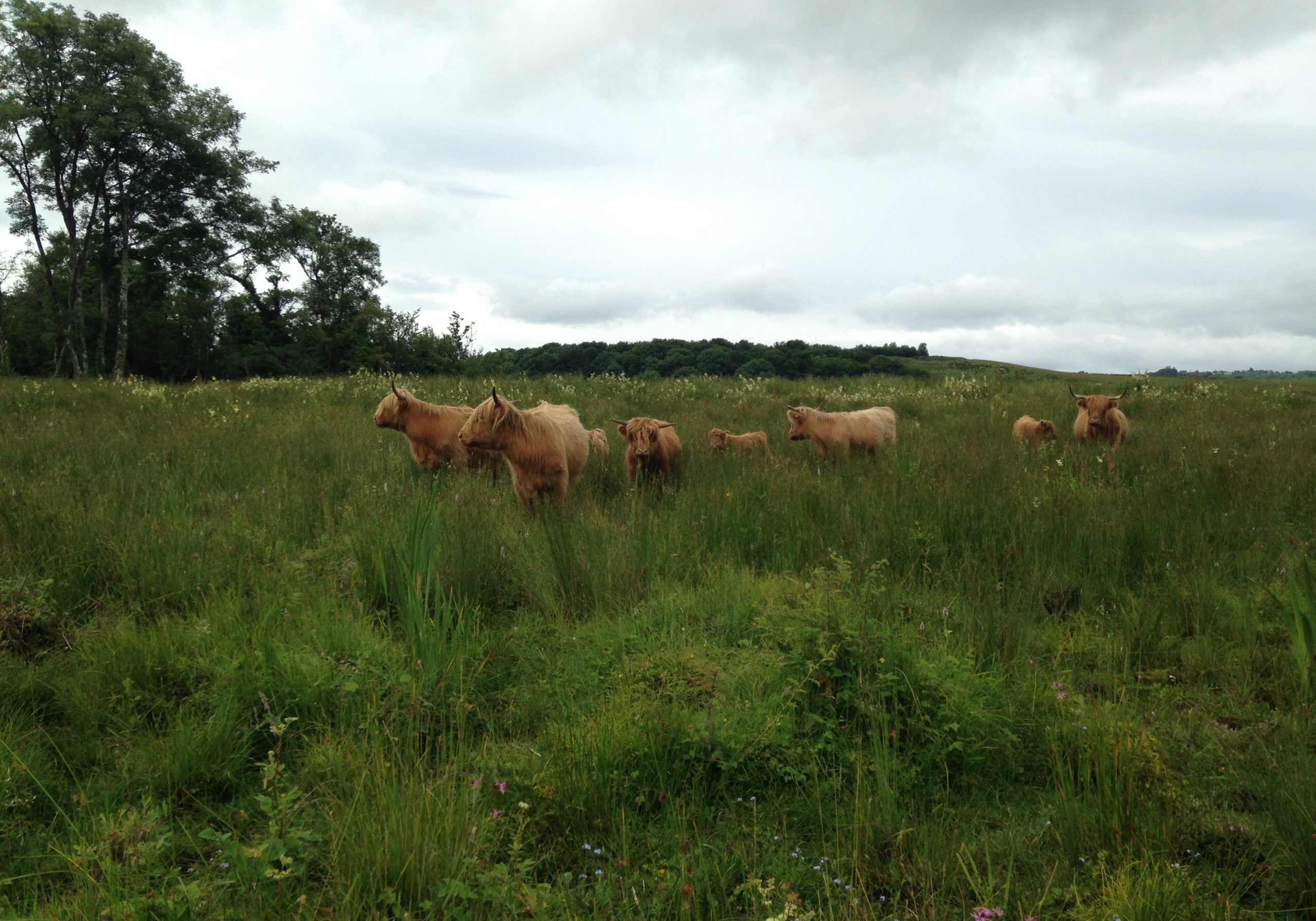
Grazing with cattle is particularly good for creating the kind of mixed sward that Curlews need.
Grazing at the appropriate density is key, along with the type and breed of livestock. Hardier breeds of cattle tending to be better for this type of grazing.
Moorlands
If your farm includes areas of moorland, manage these to retain a variety of open habitats, including bog, heathland, rough grassland and wet flushes.
Light grazing with cattle can help provide a more diverse structure in moorland habitat.
Pasture
In general, try to create as much variation as possible, with some areas lightly grazed and some more heavily grazed. You’re looking for open but tussocky vegetation.
Ideally, graze with cattle. They are not selective grazers and will rip up and trample down vegetation, breaking up the sward with their hooves and weight. The result is pasture that is much more varied.
The key is to manage the level of grazing, moving the cattle regularly to avoid over or under grazing in any one area. To achieve this in areas where there aren’t permanent fences, some farmers are using no-fence grazing (where cattle wear electronic collars that help to keep them in an area set by the farmer on computer). The area being grazed is changed as needed. Some farmers use temporary electric fences to achieve the same thing.
Grazing from late summer to early winter helps to create the right structure for the following spring’s breeding season.
Maintenance should continue through the breeding season, mid April to mid July, with livestock grazing at appropriate low densities. Avoid grazing or graze lightly where the birds are nesting, as this is when the birds are most vulnerable to disturbance from stock – eg trampling or predation. (Sheep have been known to eat Curlew eggs.)
When livestock come out from winter housing, avoiding putting them directly into fields where there are breeding waders until they have calmed.
Parasite treatments
Careful use of livestock chemical parasite treatments is a win-win for farming and wildlife, including Curlews and their chicks. Minimising their use saves money and slows down the development of resistance to the chemicals currently available.
Parasite resistance is one of the biggest challenges to the future health and profitability of the livestock sector. Insects associated with the breakdown of dung, such as flies and beetles, are an especially important part of the farming ecosystem, cleaning up pastures for ongoing grazing and providing vital food for many birds, bats and other mammals.
2. Managing trees & scrub
Curlews like an open aspect, so they can watch for predators. Trees can provide cover for ground predators, like foxes. Avian predators, such as crows, can also use them as a vantage point and to nest in.
Our general advice is to avoid planting trees in or near areas where Curlews nest.
As part of the Curlew LIFE project, we worked with farmers in some areas to remove poorly sited plantations/shelter belts.
However, we don’t recommend removing trees and scrub without seeking advice. They can be very valuable for other wildlife, including other priority species, and may be an important feature of a landscape.
If scrub removal is advised, do this between September and February, and treat stumps to minimise regrowth. Ideally, take the scrub cuttings off site.
3. Minimising disturbance
Curlews are vulnerable to disturbance from farm operations when they are nesting and when they have young chicks.
Silage fields & meadows
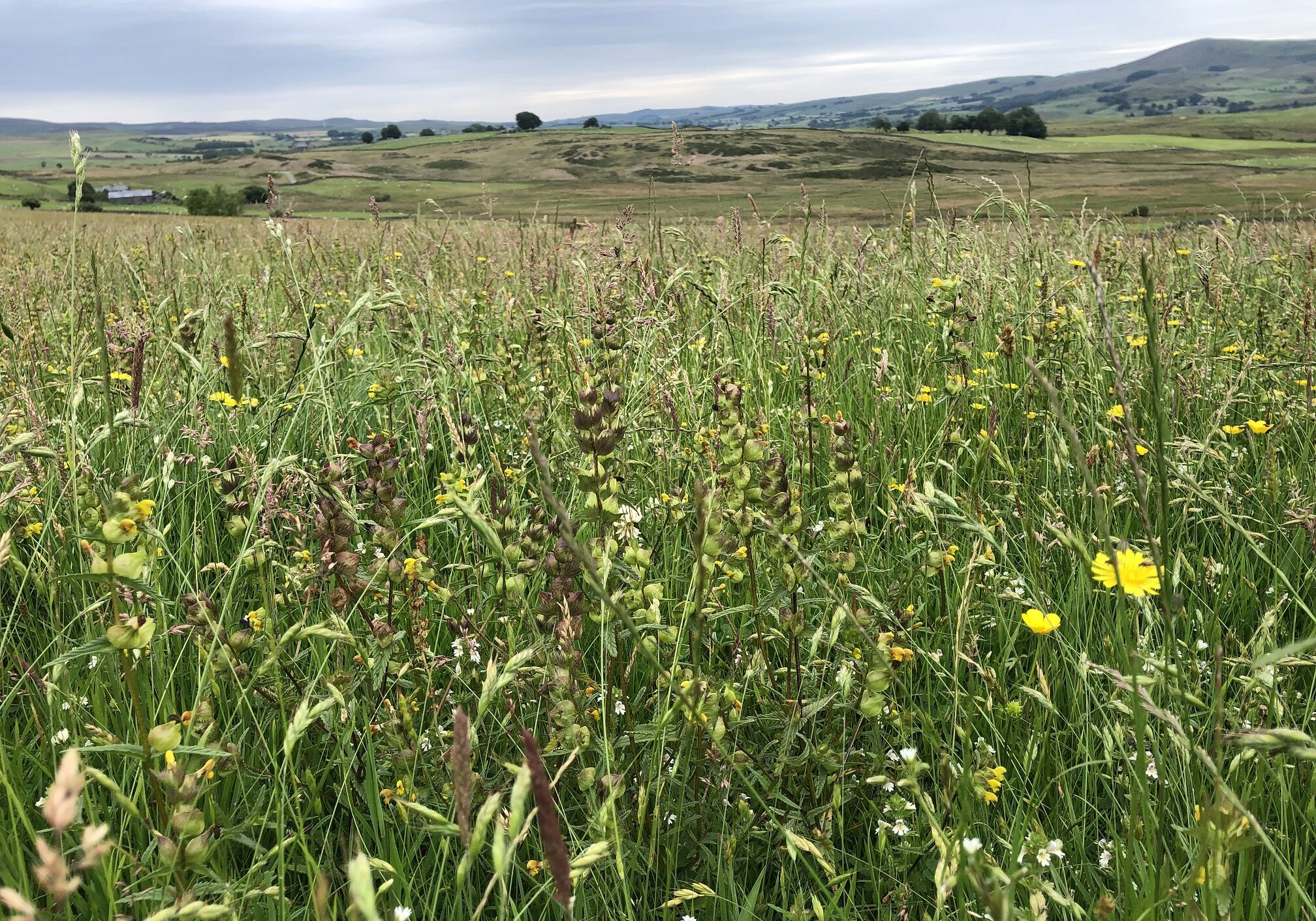
These can be important habitats for nesting and feeding. If these fields are on the fringe of moorlands, Curlews may nest on the moorland and move to silage fields and meadows to feed and rear their chicks.
For nesting, Curlews like the taller vegetation of fields shut up for hay or silage. They favour unimproved meadows as they offer more varied vegetation and also tend to be safer from farming operations. They may also use agriculturally improved fields.
Ideally, a field would be closed from as early as the beginning of April to ensure enough cover for chicks from an early brood. Curlews generally begin nesting between mid-April and mid-May, so are attracted to meadows that have some vegetation cover at this time.
Curlews need around a month to incubate their eggs, with chicks fledging around 5-6 weeks after hatching. Chicks can be drawn away to cover by their parents relatively soon after hatching.
Ideally, delay cutting until after Curlew chicks have fledged, which is generally by mid to end July.
If you can’t delay and are cutting a field with a Curlew nest with unhatched eggs, leave as large an area as possible uncut around the nest, but this may attract the attention of predators.
If you’re cutting after chicks have hatched, consider leaving any damp areas uncut as chicks are most likely to be using these.
Curlew chicks may be more likely to hunker down than move away – particularly younger chicks.
Leave an uncut margin at the field edge to help maintain some cover.
Grassland management practices such as harrowing, rolling and topping can destroy Curlew nests and kill young chicks during the breeding season, so avoid these in areas where Curlew nest or carry them out with extreme care.
There is more detailed guidance on managing silage in areas where Curlews are breeding on the Curlew Recovery Partnership website:
Curlew behaviour during breeding
If you're not sure whether Curlews on your farm are nesting or have chicks, you can pick up clues from their behaviour. Find out more in this practical video by Curlew Country
4. Healthy soils
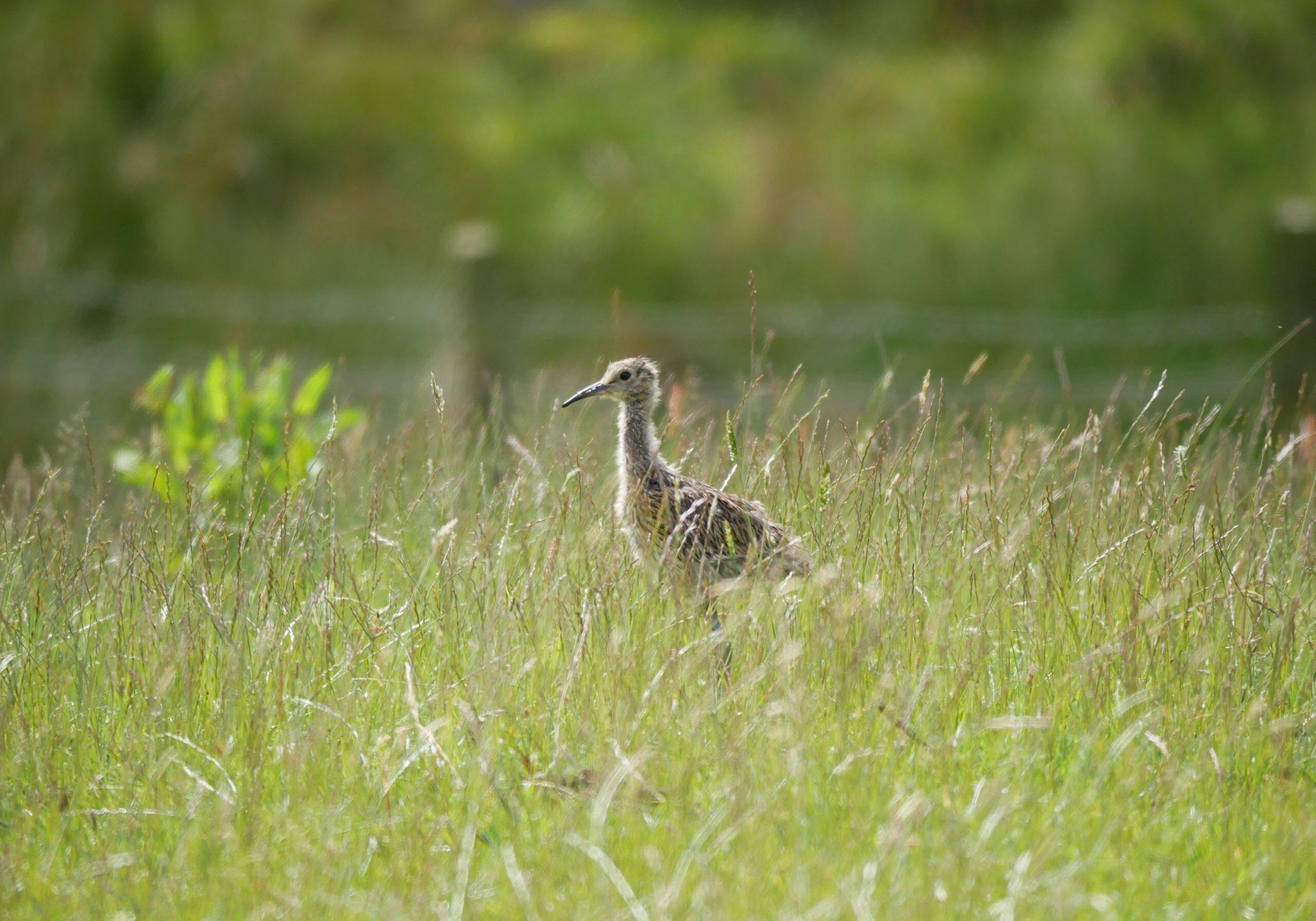
Applying farmyard manure, liming and maintaining good soil structure can boost the availability of worms and other soil life on farmland, providing food for Curlew.
Agricultural liming of grasslands (both pasture and silage fields) can be a win-win for farmers and foraging waders. The use of agricultural lime in grasslands has seen a large-scale decline since a peak in the 1960s.
Earthworms are sensitive to soil acidity. The ideal acidity level for them is around pH5.5. In fact, they’re generally absent from soils below around pH4.5. A pH level of around 6 is optimal for grass growth, but this is a bit high for earthworms. Consult with your local agriculture/environment authority in case permission is needed.
Traditionally managed grasslands are important feeding sites for Curlews. The greater diversity of grasses, herbs and flowering plants provide more insect food for chicks and adults to feed on.
5. Hydrology & wetness
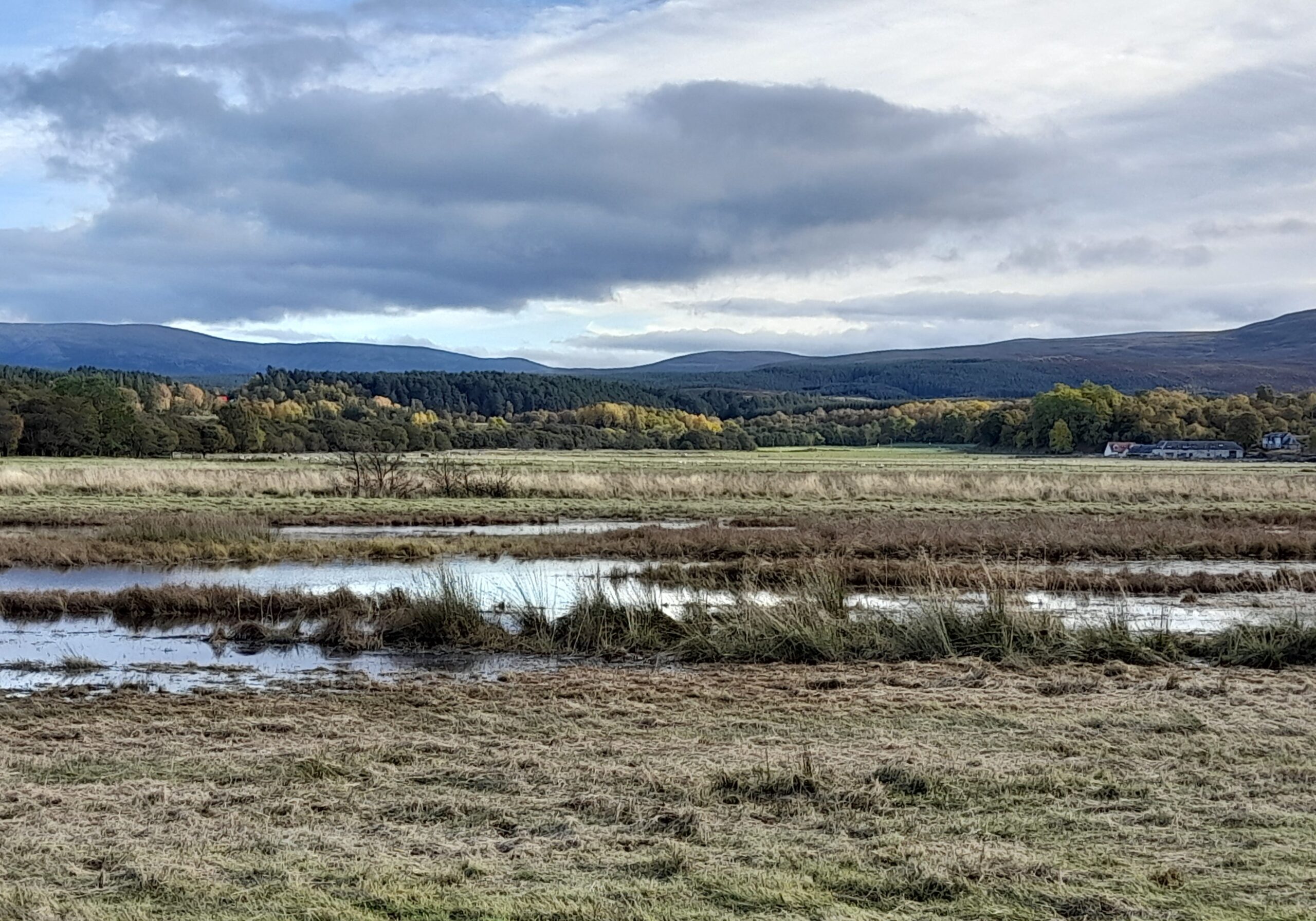
As a wading bird, Curlews feed by probing in soft, wet ground.
When they're at the coast, they forage for worms and other invertebrates in the wet sands and muds.
They equally need wet ground for feeding when they come inland to breed. Curlews struggle to feed when the ground is too hard and dry – especially chicks, with their shorter beaks.
If Curlews don’t have damp ground where they’re raising their chicks, then it means they have to lead their chicks further away to find food or the adults may have to fly off elsewhere to feed themselves. This all leaves the chicks much more vulnerable to predators.
The chicks can’t fly until they’re around five weeks old, and they feed themselves from the day they hatch – they aren’t fed by their parents. So they’re completely reliant on your land to provide them with the food they need – whether that’s insects in the grass when they’re very young, or worms and other invertebrates as they get a bit older and can probe in the soil.
In general, restoring the natural hydrology on the land and rewetting areas where Curlews breed is very helpful for them – for example, where the land’s been drained in the past. In some places, scrapes could be created, but this should be looked at in the context of the wider hydrology.
Rewetting - ditch blocking
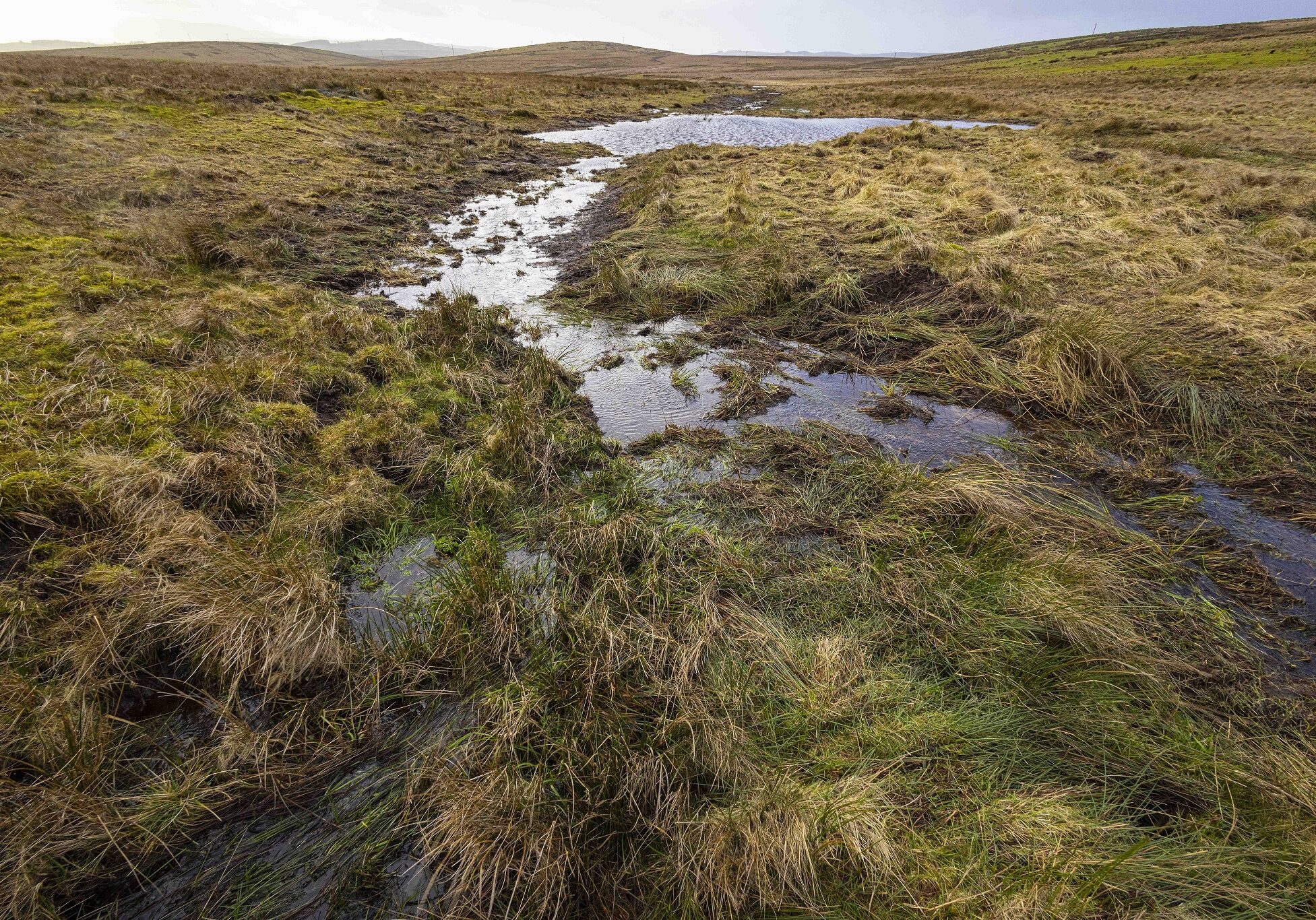
Blocking drainage ditches can help to create exactly the kind of wet areas and damp ground that are hugely important for Curlews when it comes to foraging for food.
Dams can be put in at points along the ditches, which makes them back up with water so that you get pools forming.
The Curlews will be able to forage around the muddy edges of the pools, and the surrounding land will generally be damper and softer, too.
Importantly, it should also mean the ground stays damp, even when there are long dry spells.
Digging scrapes
Digging scrapes is another way to provide wet areas for Curlews.
These are pools that may gradually dry up over the summer, continuously providing muddy areas full of invertebrates for Curlews to feed on.
Make sure your scrape isn’t the same depth across all of it. Have humps and hollows to create niches for plants and animals.
The deepest area should be around 50cm. Have a low-gradient slope at the sides, so the birds can reach the water’s edge easily.
It’s important to manage the vegetation around the edges of the scrape. Grazing can help to keep the edges open and muddy, stopping vegetation from taking over. This reduces the need for ongoing management by machinery. Alternatively, you may need to mow or clear out with a digger each year.
6. Predation management
If you are considering how to manage and reduce predation on your farm, the most important initial consideration is making sure that the habitat is as good as it can be for breeding Curlew.
Predator management is likely to be much more effective if it is done alongside measures to provide suitable breeding habitat, as outlined in this section. It should not be undertaken without these crucial interventions.
Getting the habitat right may also reduce predation risk. For example, as mentioned above, managing vegetation will help Curlew chicks to stay hidden from predators, whilst providing wet areas means they won’t have to travel as far to find food, which can expose them to predators. Targeted scrub removal can reduce vantage points and places for predators to hide.
There are also steps you can take to make your farm less attractive to predators.
One way is to limit the amount of food available to predators – for example, using enclosed feeders for livestock to reduce the number of corvids, and removing after-birth and dead livestock as quickly as possible.
You can also make it more difficult for ground predators to move around the farm. They will often follow linear features, such as fences, tracks and walls, so try to keep these to a minimum.
A number of Curlew recovery projects around the UK have used temporary nest fencing to minimise the risk of nests and eggs being predated by mammals. In some areas this has been highly effective in increasing hatching rates. However, because this disturbs birds during nesting, it is important to seek advice and follow best practice before implementing it.
If you are considering predator control, this should be informed, targeted and done at an appropriate scale and intensity. It should also be in line with legal regulations and should follow best practice in welfare standards.
Where undertaken, control of foxes and crows should be in combination with measures to reduce the underlying drivers of high predation pressure, or at the very least not contribute to those drivers. It is also important, where possible, to monitor the effectiveness of any management you undertake to support Curlew breeding on your farm.
Resources
The RSPB carried out a trial with enclosed sheep feeders, to assess how well they limited the amount of food available to birds such as gulls/crows, to reduce the numbers attracted onto the farm.
Download the report > Gull-proof feeder trial FINAL REPORT 2023
The bird's eye view
When it comes to turning around the Curlew’s fortunes, farmers have a critical role to play.
Having effective, adequately-funded agri-environment schemes that are well supported by advice in each of the four countries of the UK is essential to this.
Of course, farming is one part of a much bigger picture – albeit a very important part.
Curlews need protected areas to safeguard key breeding and wintering grounds. Sensitive development and woodland planting will prevent further fragmentation of their habitat. And the restoration of peatlands can help Curlews and the climate crisis.
It's going to take a collective effort from governments, organisations and people, focusing on everything from policy and habitat management to science and public engagement.
But, together, there’s still time to save Curlew.
Accessing support
Funding
Speak to your country's department for agriculture for information on support available, such as payment schemes with options for wading birds.
Advice and other support
There are a range of organisations working on the recovery of Curlews and other species, who may be able to offer advice and support, depending on your location.
The RSPB can provide conservation management advice. Email: conservation-advice@rspb.org.uk.
Other conservation organisations, such as the National Trust and local Wildlife Trusts may also be able to support.
Farming advice
Farm Advisory Service (Scotland)
Nature Friendly Farming Network
Curlew Action: UK-wide organisation, with excellent webinar recordings and other resources on their website
Curlew Country: Initiative in the Shropshire Hills & Welsh border, with resources for farmers and landowners on their website
Curlew recovery partnerships
England: Curlew Recovery Partnership
Scotland: Working for Waders
Wales: Gylfinir Cymru | Curlew Wales