
Curlew have successfully fledged on an island that’s part of one of our project areas for the first time in decades, after extensive restoration.
Trasna Island is part of the RSPB Lower Lough Erne Islands nature reserve in Fermanagh, Northern Ireland – one of our five project sites around the UK.
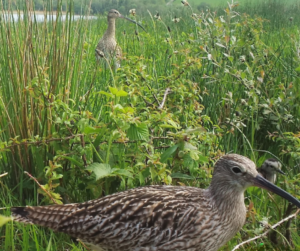
RSPB NI acquired Trasna in 2017, and set about making it a fantastic habitat for breeding waders. Starting in 2019, the team have removed trees and scrub from the shoreline to recreate five hectares of wet grassland, which is feeding habitat for waders. The majority of the large-scale habitat management works were financed through the Lough Erne Landscape Partnership, which is funded primarily by the National Lottery Heritage Fund. They were also supported by Curlew LIFE, funded by the LIFE Programme of the European Union and regional partners.
The team are now seeing the benefits of their efforts with Curlew and other waders fledging young at the site for the first time since the 1980s. To say they are delighted would be an understatement!
Amy Burns, RSPB NI’s Lower Lough Erne Estate Manager, said, “I am over the moon that Curlew and other waders have responded so positively to the work we’ve undertaken on Trasna. We’ve recorded fledging success with Curlew, but also with Lapwing, Oystercatcher and Snipe. It’s great to see that conservation works, and to see breeding waders starting to call Trasna home.”
The land on Trasna Island was previously unmanaged, but research during the project uncovered photographs from the 1920s depicting an open, farmed landscape, which was ideal for breeding Curlews. These images inspired the vision for the habitat restoration works, to restore the island with potential for breeding waders. The landscape of Trasna is now similar to when it was farmed by the ‘Queen of Trasna’, Peggy Elliott. Also known as ‘Orange Peggy’, she lived there until 1891 when she passed away at the age of 108.
This restoration project would not have been possible without the dedication and hard work of many people and organisations. RSPB NI has been working alongside the Lough Erne Landscape Partnership in particular. Initial funding from the Department of Agriculture, Environment and Rural Affairs enabled RSPB NI to acquire Trasna in 2017.
Habitat improvements have been a hugely important part of Curlew LIFE at all our project areas, from putting in wet features and rewetting land through to managing vegetation like rush, scrub and poorly sited conifer plantations, creating the kind of habitat that Curlews need to nest and raise their chicks. These improvements will continue to benefit Curlews in the longer term in these landscapes, as a legacy well beyond the life of the project. Trasna has become living proof that if you build it, they will come – our very own Field of Dreams!
-
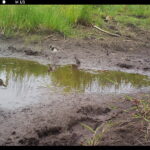
- Lapwing chicks using a wet feature created for waders on Trasna Island
-
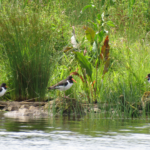
- Oystercatchers on the shore of Trasna Island
-
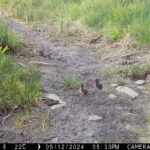
- A Snipe leads its chicks on a Trasna tour!