
Saving Curlews on the Antrim Plateau
The Glenwherry project area overlaps with the Antrim Hills Special Protection Area and Important Bird Area. It is an extensive upland plateau that supports large numbers of breeding waders. The area is privately owned and used mainly for cattle and sheep grazing.
Glenwherry is widely regarded as one of the best sites in the country for breeding Curlew. Alongside our other Northern Ireland project site in Lough Erne, these two project areas support nearly half of the population of breeding Curlew in Northern Ireland.
We worked with farmers across the project site to undertake habitat management for breeding Curlew – increasing wet areas, removing rush and scrub as well as protecting individual nests using predator-proof fencing. We undertook extensive monitoring of the area to better track the success of breeding Curlew.
Outcomes
One single statistic from Glenwherry sums up the success at this site:
202 Curlew chicks fledged from here during the four years of Curlew LIFE.
It's an exceptional outcome, building on more than two decades of RSPB involvement with farmers in the area. Curlew LIFE provided the injection of action needed to capitalise on all the work that had gone before. The area now has strong signs of a recovering and growing Curlew population.
Ringing of Curlew chicks in 2024 should yield very valuable information in future years about return rates for juveniles, lifespans, how the birds use the site and hopefully where they spend the winter. It has already demonstrated a case of Curlew chick adoption.
A highlight
Trial of conservation detection dogs
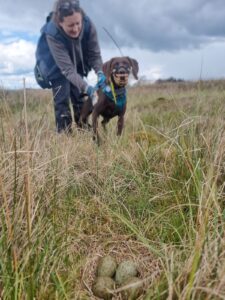 We worked in partnership with Conservation Detection Dogs NI to trial the use of specially trained dogs to find Curlew nests. The trial showed that there is good potential for the dogs to reduce the amount of time it takes to find Curlew nests so that they can be protected from predators. It also highlighted a few changes that could be made to the method we used, which could potentially make the use of the dogs even more effective in the future.
Find out more
For more information about the work carried out during the Curlew LIFE project at Glenwherry and other sites, download our end-of-project summary booklet:
Curlew LIFE Layperson's Report 2025
Why this project matters.
A look at the stats.
Curlew in Northern Ireland are in a perilous situation with a current rate of decline which could see them disappear from the country within the next decade.
Image gallery

Photo by Neal Warnock
Photo by Neal Warnock

Photo by Neal Warnock

Photo by Neal Warnock
Photo by Neal Warnock
Photo by Neal Warnock
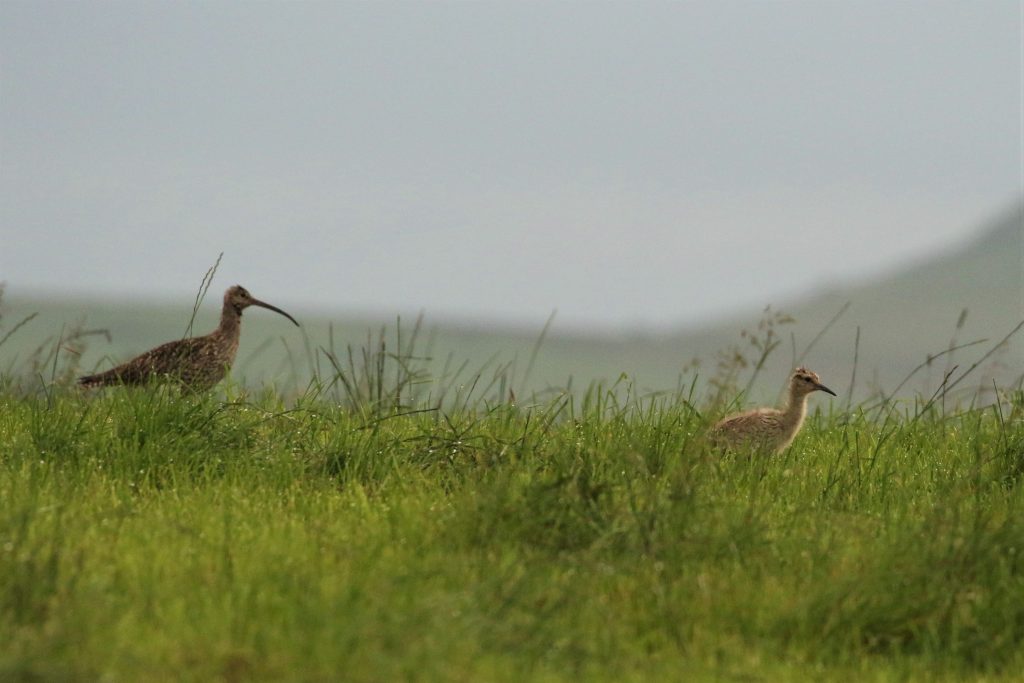
Photo by Neal Warnock

Photo by Neal Warnock
Successes & highlights
August 2024
202 chicks successfully fledge from Glenwherry during Curlew LIFE project
August 2024
Last fledglings in first weekend of August
Breeding season 2024
- Ringing of Curlew chicks carried out
- Conservation detection dogs used to help find Curlew nests
19 April 2024
1st nest found
6-7 April 2024
Open Weekend held for Curlew conservationists from around the UK, sharing information
Breeding season 2023
- 30 nests found
- 27 nests fenced
- 37 Curlew pairs
- 55 Curlew chicks fledged
Winter 2022-23
Wet pools called scrapes created and 1km of drainage reprofiling to improve wet areas where Curlews can forage for food
August 2022
69 chicks fledge from our monitored broods - more than double last year's count!
Winter 2021-22
37.5 ha of rush cutting carried out, to help create good nesting habitat for next season
August 2021
28 chicks fledge out of the broods we monitored
May 2021
First nests found, first nest protection fences up
February 2021
48ha of rush cutting undertaken over winter to improve breeding habitat for Curlew
Video gallery
Our partners
The Curlews in Crisis project is managed by the RSPB with generous support from the EU LIFE programme and the following project partners; Cairngorms Connect, Fellfoot Forward Landscape Partnership Scheme, Natural Resources Wales and NIEA-DAERA.
Cairngorms Connect is part of the Endangered Landscapes Programme, which is managed by the Cambridge Conservation Initiative in partnership with Arcadia - a charitable fund of Lisbet Rousing and Peter Baldwin.
Fellfoot Forward Landscape Partnership Scheme is led by North Pennines AONB Partnership and funded by The National Lottery Heritage Fund.
Additional funding has also been received from the government’s Green Recovery Challenge Fund. The fund is being delivered by The National Lottery Heritage Fund in partnership with Natural England and the Environment Agency.


