
Curlew conservation at RSPB Insh Marshes
Flanked by the Monadhliath and Cairngorm Mountains in the Scottish Highlands, RSPB Insh Marshes encompasses a section of the River Spey floodplain. It is an internationally important wetland, supporting many rare and protected species, including an important assemblage of breeding birds.
The site holds a very high density of breeding Curlew and many other wader species. The sloping flanks and glacial mounds surrounding the floodplain arguably make it one of the best sites in the whole of mainland Scotland to admire them. As wader populations are predicted to shift northwards in response to changes in climatic conditions, the nature reserve will become ever more important for them.
Each year, the reserve management team ensures that the marshes are in prime condition for Curlew returning to breed. This project supported improvements to nesting and foraging habitat for Curlew, including rush and scrub control, grazing, and liming to increase worms as food for Curlews.
It also delivered more monitoring, including radio tagging and tracking of Curlews in 2023, helping to identify the factors limiting breeding success, informing management and measuring the impact of our activities - all helping to establish Insh Marshes as an exemplary site for Curlew conservation.
We raised awareness among local communities with a varied programme of events - from the Waders Welcome gala arts evening in the spring, to Curious Curlew Mornings during breeding season, giving people the chance to see Curlews. Our team also engaged more widely through schools activities and via the local media.
Find out more about Curlew LIFE at Hadrian's Wall and our other sites in our final report:

Why this project matters.
A look at the stats.
RSPB Insh Marshes is one of the largest functioning floodplains in the UK. One of the few areas where low intensity management enhances the natural dynamics supporting a high density of waders.
Image gallery


Project successes
April to June 2024
Curious Curlew Mornings give the public a chance to drop in and see Curlews on the reserve.
21 April 2024
The team celebrates World Curlew Day with a town centre presence at Kingussie.
Season results 2023
87 pairs recorded. 10 chicks confirmed fledged via radio tagging. Estimated 20 across reserve.
June 2023
The staff and volunteer team at Insh Marshes managed to find 27 Curlew nests. No easy task, given how notoriously sneaky these birds are!
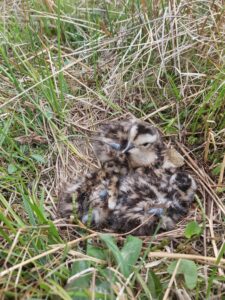
Curlew chicks in a nest at RSPB Insh Marshes
May 2023
Curious Curlew Mornings during May, June & July give the public a chance to find out more about this intriguing species. Our team explained how they manage the reserve for Curlew and the tricky business of monitoring breeding success.

Intern Martine Stead demonstrating tracking Curlews with a receiver aerial
April 2023
The RSPB Insh Marshes team marks World Curlew Day with visits to local towns, highlighting the challenges that Curlews and other waders face and showcasing the work to help them at the reserve.
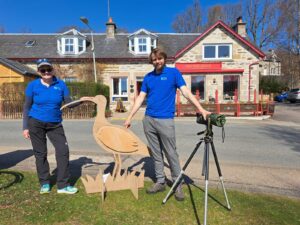
Intern Martine Stead and Curlew LIFE project officer Thijs Claes at one of their roadshows for World Curlew Day 2023
March 2023
Breeding waders had a rousing welcome back to RSPB Insh Marshes with an evening of music and talks.
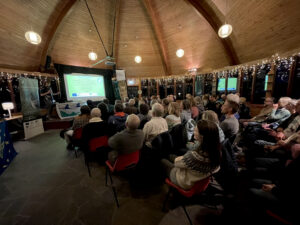
Curlew LIFE project officer Thijs Claes at the Waders Welcome event on Fri 17 Mar 2023.
November 2022
The public had a rare chance to see parts of RSPB Insh Marshes from the water on a paddleboarding guided tour. The reserve team pointed out areas where Curlews and other waders breed.
November 2022
RSPB's South Highland Area Team came over to Insh Marshes to tackle some shrub developing near good curlew breeding ground. Keeping the landscape open will reduce predation pressures and stop degradation of the high quality fen habitats. Although we have already reached our shrub bashing target for the Curlew LIFE project (8ha), we will keep evaluating and improving the condition of these valuable breeding grounds.
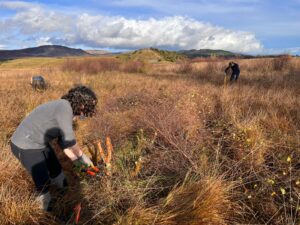
Photo by Pete Moore
October 2022
The ambitious landscape scale vision and on the ground conservation work delivered by Curlew LIFE and the Cairngorms Connect partnership inspired the lecturers from the University College of London. They believed the projects to be great case studies to enthuse and inform the next generation of ecologists and conservationists. So, on a very sunny Autmn day, RSPB Scotland Insh Marshes hosted their students of the MSC course in Biodiversity, Evolution and Conservation.
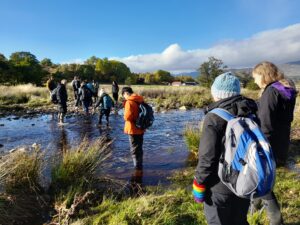
UCL students crossing one of the braided channels of the river Tromie
August 2022
We managed to show of some of our fledged chicks on the final Curious Curlew Morning of this breeding season. In total, more than 100 people attended these events, learning more about the behaviours, opportunities and challenges for curlew in this landscape.
June 2022
The new information panel informing visitors about the work Curlew LIFE delivers at RSPB Insh Marshes is now installed looking over the floodplains of the Spey, one of the best breeding sites for Curlew in Mainland Scotland.

Curlew LIFe information panel at RSPB Insh Marshes. Photo by Thijs Claes
May 2022
Training completed for the first Curlew LIFE volunteer monitoring team. Four local volunteers and a residential intern will help with nest searches and avian predator surveys.
April 2022
We were out in the local community during World Curlew Day again sharing our enthousiasm about Curlew conservation. Curlew LIFE Intern Callum upped the cuteness level during the day with this delicate craftwork.
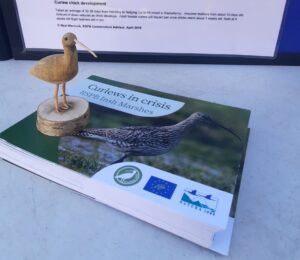
Mini curlew sculpture by Curlew LIFE Intern Callum
April 2022
The Curious Curlew Mornings has started. Throughout the breeding season of 2022, we will organise eight mornings for the local community and reserve visitors to enjoy and learn more about the spectacle of breeding curlew on the floodplain.
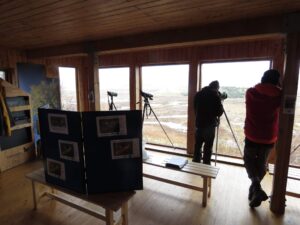
The first curious curlew event. Hiding inside because of persistent rain.
August 2021
Completed the first year of monitoring. Despite several spring floods, almost half of our pairs have hatched some of their eggs. Our future work will allow us to boost these numbers and inform us how many of the chicks are fledging.
July 2021
A visit from MSP Mark Ruskell including discussions about community engagement in landscape scale nature restoration project.
May 2021
Start of the mammal predator trail camera program. Data collected from 13 trail cameras will inform us on mammal predator activity levels on the reserve throughout the year.
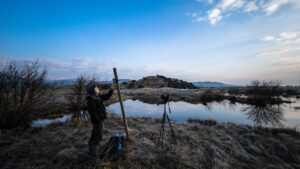
Volunteers setting up one of the trail cameras.
April 2021
We took out Corry McCurlew in the local community for World Curlew Day. Not a bad day spend sharing facts about the plight of Curlew in the UK during and listening to Curlew sounds calls.
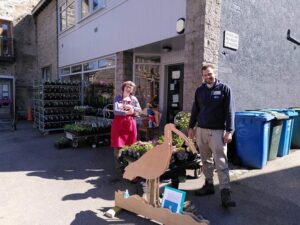
Project officer Thijs Claes bringing Curlews close to the local communities around Insh Marshes.
April 2021
Kicking of with our first breeding season. Breeding and feeding habitats, curlew pairs and predator polulations will be carefully monitored for the next four years to come.
March 2021
Topping and shrub management completed
February 2021
First curlew sighting of the year on Insh Marshes of February 9th by Reserve Warden Pete Moore
January 2021
Thijs Claes hired as the Curlew LIFE Project Officer for Insh Marshes
Video Gallery
Our partners
The Curlews in Crisis project is managed by the RSPB with generous support from the EU LIFE programme and the following project partners; Cairngorms Connect, Fellfoot Forward Landscape Partnership Scheme, Natural Resources Wales and NIEA-DAERA.
Cairngorms Connect is part of the Endangered Landscapes Programme, which is managed by the Cambridge Conservation Initiative in partnership with Arcadia - a charitable fund of Lisbet Rousing and Peter Baldwin.
Fellfoot Forward Landscape Partnership Scheme is led by North Pennines AONB Partnership and funded by The National Lottery Heritage Fund.
Additional funding has also been received from the government’s Green Recovery Challenge Fund. The fund is being delivered by The National Lottery Heritage Fund in partnership with Natural England and the Environment Agency.


